 27 Min


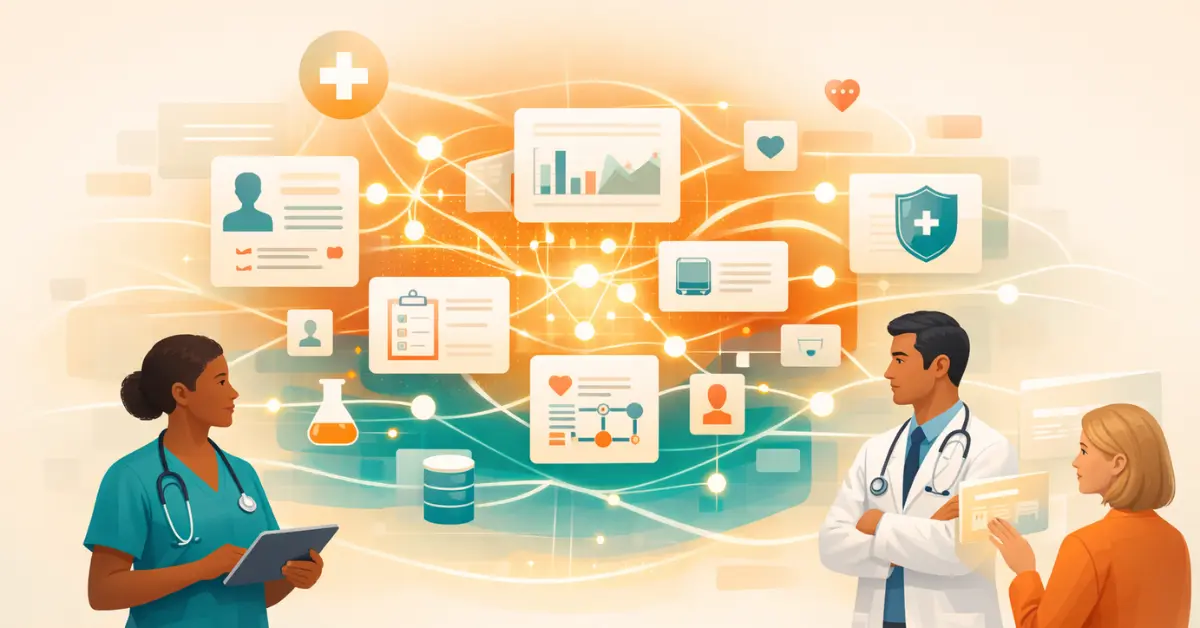
The healthcare sector generates vast amounts of information every day, from clinical research and treatment protocols to patient records and operational data. Yet much of this knowledge remains fragmented. As a result, critical information is often hard to access when it matters most, contributing to inefficiencies, inconsistent practices, and avoidable medical errors.
This is where knowledge management software plays an important role. Knowledge management in healthcare is the systematic process of capturing, organizing, sharing, and applying organizational knowledge to improve patient outcomes, support evidence-based decisions, and enhance operational efficiency. It brings together clinical knowledge (guidelines, best practices, research), operational knowledge (policies, workflows), and experiential knowledge (case studies, expert insights).
Unlike traditional systems that merely store data, a healthcare knowledge management platform turns scattered information into accessible, actionable intelligence, available to healthcare professionals at the point of care.
So, let’s dive into what knowledge management in healthcare means, explore its key benefits, use cases, and discuss how to implement it effectively!
Table of contents
- Understanding Knowledge Management in Healthcare
- The Importance of Knowledge Management in Healthcare
- Key Benefits of a Centralized Healthcare Knowledge Base
- Use Cases: Patient Access, Contact Centers, and Hospital Operations
- Essential Features and Trends in Healthcare KM Systems
- HIPAA Compliance and Data Security
- Knowmax Solutions and Case Examples
- Conclusion and Next Steps
Understanding Knowledge Management in Healthcare
Knowledge management in healthcare means capturing, organizing, and sharing all the essential information that clinicians and administrators need at the point of care.
In practice, this involves creating a centralized knowledge base – a single, searchable repository that holds clinical guidelines, treatment protocols, patient care procedures, administrative forms, and other critical content.
For example, a hospital might store its medical protocols, patient instructions, and regulatory policies in one integrated system. When this information is kept up-to-date and easy to access, healthcare teams can make better decisions, coordinate care more efficiently, and reduce delays in treatment.
As one expert explains, modern healthcare knowledge management “translates insights into actionable steps,” ensuring that the right knowledge is available to the right person at the right time.
In a multi-facility hospital system or large health network, knowledge management can be especially powerful. Instead of doctors and nurses hunting through siloed EHR tabs, intranets, or paper files, they use a unified platform – much like a Google for healthcare. Such a system supports semantic tagging, federated search, and real-time updates, so providers across different departments or sites can quickly find the latest treatment guidelines or equipment instructions.
Put simply, an effective knowledge management platform acts as the “single source of truth” for patient care information. By integrating into clinicians’ daily workflows (e.g. accessible on tablets, desktops, or mobile devices), these systems cut down on wasted search time and keep teams on the same page.
A Simple, Practical Guide for Getting Started with Knowledge Management
The Importance of Knowledge Management in Healthcare
Healthcare is an information-driven industry – but its complexity creates challenges. Medical knowledge doubles rapidly, clinical protocols change with new research, and regulatory requirements (HIPAA, accreditation, etc.) constantly evolve. In this environment, outdated systems and fragmented information can slow down care and even endanger patients. For instance, siloed knowledge or poor insight-sharing “continue to slow down healthcare innovation and impact patient outcomes”.
Many hospitals find that valuable information is trapped in emails, PDF files, or legacy software, making it hard to retrieve when needed. This leads to inefficiencies: critical questions (about billing, insurance eligibility, or medication dosing) often go unanswered on time, staff spend excessive hours locating data, and new employees struggle to ramp up.
The COVID-19 pandemic highlighted these gaps. Reports of overwhelmed contact centers and unreachable patient support lines showed how dire the consequences can be when healthcare knowledge isn’t well-managed. In response, many hospitals embarked on digital transformation. They realized that patients now expect seamless experiences – online scheduling, live chat support, remote monitoring – just as in other industries.
As one survey found, 57% of healthcare leaders now rate improved consumer (patient) experience as a top goal for IT investments. Knowledge management solutions are a key part of this transformation, enabling organizations to deliver the fast, consistent information that modern patients demand.
On the staff side, healthcare workers face burnout partly due to information overload. They juggle complex tasks across disciplines (nursing, pharmacy, radiology, etc.), and “siloed, outdated systems” can hinder their efficiency.
A centralized KM platform breaks down these silos. For example, a nurse in the ICU and a therapist in a rehabilitation ward can both access the same guideline on fall-prevention procedures, even if they never interact directly. This multidisciplinary sharing of knowledge leads to better coordination and fewer errors.
In summary, knowledge management in healthcare is not just a nice-to-have – it is foundational. It ensures that evidence-based medicine is applied consistently, helps meet stringent regulatory standards, and enables providers to focus on care rather than hunting for information. As one analysis notes: “Healthcare knowledge management goes beyond compliance. It helps reduce duplication, speed up onboarding, and enable better collaboration across teams”.
In short, managing knowledge effectively means safer patients, happier staff, and a more agile healthcare organization.
Key Benefits of a Centralized Healthcare Knowledge Base
A robust healthcare knowledge base delivers measurable improvements across the board. Some of the most important benefits include:
1. Faster, better patient service
With a centralized knowledge base, front-desk staff and call center agents can quickly answer patient inquiries about appointments, billing, or treatment instructions. For example, a centralized FAQ on insurance coverage or pre-surgery prep allows staff to resolve questions in seconds instead of minutes. This reduces wait times and frustration for patients. As Knowmax notes, a common outcome of implementing KM is that “teams [find] the answers they need in seconds, so patients spend less time waiting”
2. Reduced medical errors and risks
When clinicians have instant access to the latest, evidence-based protocols and dosing guidelines, the chance of mistakes drops. A KM system provides decision-support tools and up-to-date clinical workflows right at the point of care. Studies show that having quick access to standard protocols (for example, medication administration or emergency interventions) “reduces the chances of medical errors”. Keeping knowledge updated means fewer outdated practices slip through. Overall, this enhances patient safety and builds trust.
3. Enhanced staff training and onboarding
Onboarding new nurses, technicians, or administrative staff is faster and smoother with a KM platform. Instead of relying on bulky manuals, new hires can learn via easy-to-navigate digital guides and videos. In fact, experienced providers often create role-specific “starter packs” – for instance, onboarding kits for clinical trial associates or compliance officers – ensuring every new employee begins with the exact knowledge they need. This accelerates productivity, boosts confidence, and means patients receive attentive, informed care from day one.
4. Consistent care and collaboration
By breaking down departmental silos, everyone works from the same playbook. Nurses, doctors, lab technicians, and administrators can all refer to one authoritative source. This unifies patient experiences: whether a question is asked at the registration desk or on a telehealth chat, the guidance is the same.
5. Operational efficiency and cost savings
Knowledge management streamlines workflows. For example, automating insurance claim processes or standardizing order entry forms reduces administrative bottlenecks. Faster issue resolution and fewer hand-offs also increase staff productivity. In one case study, implementing KM in contact centers led to unified operations and enabled data-driven decision-making for executives.
Over time, these efficiencies translate into reduced labor costs and shorter hospital stays. Indeed, centralized knowledge helps hospitals use resources more effectively, as any improvements (e.g. reduced no-shows or optimized staff scheduling) quickly pay off in cost savings.
See How Global telecom player transforms CX and achieves $60,000 cost savings with Knowmax
6. Improved patient outcomes and satisfaction
Ultimately, all these gains – faster service, fewer errors, better coordination – contribute to better patient health outcomes. When clinicians make informed decisions (supported by the latest research and best practices in the KM system), patients recover faster and complication rates drop. Higher quality care leads to greater patient satisfaction.
In one summary of KM benefits: “doctors can make informed treatment decisions… The results are faster recovery times and reduced complication rates, which leads to higher satisfaction.” Better experiences also foster patient trust and loyalty to the healthcare provider.
In practice, these benefits have been observed in real healthcare settings. For example, integrating knowledge management into hospital contact centers can significantly improve key metrics: Tampa General Hospital created an Experience Center to centralize patient communications, which handled 30,000 calls per week and saw a 20% drop in no-shows along with large increases in online bookings. This illustrates how empowered staff and informed patients lead to more efficient care delivery.
Use Cases: Patient Access, Contact Centers, and Hospital Operations
Healthcare organizations encompass many functions – each can leverage knowledge management in distinct ways. Here we highlight how KM supports Patient Access, Contact Centers, and broader Hospital Operations:
1. Patient Access and Front-Desk
The Patient Access department (which handles registration, insurance verification, and scheduling) is often the first contact point for patients. A comprehensive knowledge base helps these teams navigate complex insurance rules, pre-authorization criteria, and appointment protocols. For instance, if a scheduler has a question about whether a procedure is covered, they can instantly query the KM system. This speeds up patient check-in and reduces billing errors.
By standardizing information, a knowledge base ensures that no matter which representative helps the patient, the guidance is identical – reducing confusion. Many organizations now create a “patient journey” knowledge map: content organized around each stage (e.g. insurance checking, lab orders, discharge instructions) so staff can follow the flow of patient access.
2. Healthcare Contact Centers
Contact centers (including nurse hotlines, appointment lines, and call centers) are critical in patient engagement. These centers require 24/7 reliability, instant information access, and strict compliance with regulations. Knowledge management systems play a key role here. When contact center agents tap into a KM platform, they gain real-time access to medical knowledge, scheduling workflows, and triage guidelines. This supports conversational systems (such as phone or chat) in delivering accurate answers.
In practice, fragmentation in contact center knowledge can frustrate patients: one case study of Sentara Health (a large US hospital system) found that agents worked in isolation without a centralized knowledge base, leading to “inconsistent information being provided to patients”. Sentara partnered with consultants to overhaul this, establishing a single system-wide knowledge management system for all 13 of its contact centers. The result was standardized information sharing and a seamless patient service experience across locations. The unified knowledge base became a hub where even decentralized teams could access central resources on policies, scripted responses, and role-based protocols.
3. Improving Clinical and Administrative Operations
Beyond patient-facing functions, KM transforms internal hospital operations. Consider clinical teams: they rely on evidence-based guidelines, medication formularies, and equipment usage instructions. A KM system organizes all these into intuitive categories (clinical protocols, practical guides, administrative forms, etc.). This is especially vital for multi-site health networks, where each clinic or hospital might have slightly different procedures. Knowledge management handles this by allowing local differentiation: the system can tag content by department or site, so a cardiology protocol in Hospital A is visible only where relevant. When best practices change (e.g. a new sepsis protocol), administrators push updates in real time to all affected sites. This keeps care consistent across locations.
Knowledge management also enhances interdisciplinary care. For a patient with complex conditions, nurses, specialists, pharmacists, and case managers all need to collaborate. A centralized knowledge base ensures that everyone refers to the same data – for example, a standardized discharge plan or education material for diabetic patients. This coordinated approach has been shown to improve outcomes by creating an “insight-driven” care system.
On the administrative side, departments like supply chain, IT, and HR benefit too. Standard operating procedures (SOPs) for equipment maintenance, cybersecurity protocols, or even employee benefits can all reside in the KM platform. When team members are unsure about an internal process, they consult the same knowledge base. This reduces misunderstandings and training gaps.
In summary, almost every hospital unit – from the lab to facilities management – gains from an up-to-date knowledge repository.
4. Patient Self-Service and Education
A modern knowledge management strategy extends beyond staff: it empowers patients directly. Many hospitals publish portions of their knowledge base on patient portals or mobile apps. This enables self-service: for example, a patient can use a chatbot to find instructions on preparing for surgery, request a callback, or verify insurance coverage. Consistent, clear patient-facing content (written in patient-friendly language) improves the patient experience. In all cases, whether it’s a patient reading a FAQ or a clinician querying an internal wiki, the knowledge is the same, maintaining a unified brand experience.
Taken together, these use cases show that knowledge management in healthcare is universal – it underpins every interaction. By focusing on real-world examples (like Sentara’s unified contact center and Tampa General’s patient scheduling improvements), organizations can visualize how a KM initiative will play out. The common theme: integrating a knowledge base across systems and teams breaks down complexity, enabling quick, accurate service at every touchpoint.
Essential Features and Trends in Healthcare KM Systems
Selecting the right knowledge management platform is crucial. The ideal healthcare KM system should combine user-friendly features with cutting-edge technology:
- Powerful Search and AI Assistance:
Healthcare staff cannot afford to spend minutes browsing. The system needs a Google-like search engine that immediately retrieves relevant documents, images, or videos. Advanced solutions (like Knowmax’s AI-powered search) understand synonyms and context, so even if a user types a vague query, the system suggests the correct protocol. In fact, “AI-based knowledge management software instantly serves up the right answers from your enterprise’s knowledge corpus,” freeing agents from manual searches. Beyond search, AI can help identify knowledge gaps: for example, prompting content updates when new medical guidelines emerge.
Using GenAI Prompts to Improve Everyday Knowledge Searches
- Centralized, Multi-format Repository:
All knowledge – clinical, administrative, patient education – lives in one organized repository. That includes not just text documents but also multimedia (video tutorials, infographics) and decision flows. Users need to update content in real-time without IT intervention. A robust system provides one searchable location for everything (SOPs, insurance guidelines, training materials, policies). This makes information easy to update and reliable. Importantly, the KM system must integrate with existing tools (like EHRs or CRM platforms) so that content is accessible within the user’s natural workflow.
- Omnichannel Access:
Patient care happens across many channels – phone calls, in-person visits, patient portals, kiosks, chatbots, etc. The knowledge platform must deliver consistent information across all of these touchpoints. For contact center leaders, this means the same solution powers the IVR system, email response templates, chat agents, and even on-site kiosks. For example, Knowmax’s omnichannel knowledge base can push self-help guides to a hospital’s website or mobile app, while simultaneously supporting live agents with the same content. This ensures patients and staff always get up-to-date guidance, no matter how they ask.
- Interactive Workflows and Visual Guides:
Knowledge isn’t just static text; sometimes complex scenarios call for interactive tools. For instance, cognitive decision trees can guide a triage nurse through symptom checks, ensuring no step is missed. Knowmax highlights this trend: “Turn complex SOPs into interactive workflows… with our no-code cognitive decision trees… to deliver faster & personalized resolutions at scale”. Visual aids are also key – instead of long manuals, smartKM uses annotated images and videos. In practice, a technician might click through a visual guide on setting up an infusion pump, rather than reading dense text. These features reduce cognitive load and training time.
- Analytics and Feedback Loops:
A KM system should track usage and performance. Leaders want to know which articles are most-read, which FAQs are helping patients self-resolve issues, and where there are content gaps. Platforms include dashboards that show search trends and satisfaction scores. For example, if many agents search for “MRI prep” and no result appears, this signals a need for new content. As Knowmax advises, a strong KM tool will provide “feedback loop and analytics” so organizations can continuously refine their knowledge base. This turns the knowledge base into a living system that evolves with user needs.
- User-Friendly Interface:
Even the best content is useless if staff can’t navigate the system. A clean, intuitive UI is essential. Non-technical staff should be able to add or edit content (DIY editing) and browse with minimal training. Chatbots and AI assistants (embedded within the KM) can further reduce friction by allowing natural-language queries. The system should feel like an extension of clinicians’ tools, not a burdensome separate app.
- Scalability and Reliability:
Healthcare systems can be huge. The KM platform must handle thousands of users and content pieces without slowdowns. Cloud-based solutions that support load balancing and 24/7 availability are becoming standard, especially since many hospitals now adopt cloud EHRs. During COVID-19 surges, organizations shifted to cloud platforms to manage spikes – a capability that knowledge management vendors also need to provide.
- Security and Compliance:
The KM platform must enforce robust access controls, encryption, and audit trails. Features like role-based permissions, version history, and document expiration align with healthcare regulations. For example, if a nurse no longer needs ICU protocols after a role change, their view of the knowledge base can be restricted. These security features ensure compliance and protect patient trust.
In terms of emerging trends, artificial intelligence and automation are accelerating KM in healthcare. Integration with NLP and models like ChatGPT is on the horizon for conversational assistants that answer patient questions in layman’s terms. Remote patient monitoring devices generate data that could feed into knowledge systems for personalized care guidance. Telehealth growth means even more patient interactions happen through digital channels, so KM content is being optimized for virtual platforms (e.g. quick reference cards for video-visit scenarios).
Overall, the future of healthcare knowledge management blends human expertise with AI augmentation, making the system more proactive and personalized.
A Simple Checklist to Choose the Right Knowledge Management System
HIPAA Compliance and Data Security
In healthcare, security is non-negotiable. Any knowledge management system must be fully HIPAA-compliant and rigorously protect electronic Protected Health Information (ePHI). This means strict access controls, encryption of data both in transit and at rest, and detailed audit trails of who viewed or edited content. According to recent analyses, data breaches are a mounting concern: over 133 million patient records were exposed in 2024, highlighting the enormous risks. Ensuring patient trust requires a proactive, security-first approach.
Key steps for compliance include implementing end-to-end encryption (so that knowledge content and patient data are never exposed in plaintext) and role-based access controls (RBAC) (so staff see only the information they are authorized to handle). Regular staff training is also essential to prevent human errors (like misconfiguring permissions). For example, HIPAA Vault advises that hospitals should “implement end-to-end encryption, role-based access controls (RBAC), and regular staff training” as top strategies to overcome compliance challenges.
A healthcare KM platform should also integrate with the organization’s identity management (e.g. single sign-on, multi-factor authentication) and alert administrators of suspicious access patterns. It should support features like document versioning and approval workflows to ensure all clinical guidelines are reviewed by the appropriate experts before release. These safeguards make the system auditable for regulatory reviews.
HIPAA imposes particular concerns for contact centers and mobile access. When patient-sensitive questions come in via phone or chat, agents and even AI bots must not inadvertently expose PHI. Knowledge management solutions often address this by offering HIPAA-compliant conversation flows. For instance, Knowmax notes that it supports “HIPAA-compliant agent flows for safe patient handling”. In practice, an agent-assisted knowledge script might mask or require confirmation before sharing sensitive details.
By embedding these compliance measures into the core of the platform, healthcare organizations ensure that improved knowledge sharing never compromises security. In short, “in healthcare, security and compliance are non-negotiable”, and a modern KM system must meet those strict standards by design.
Knowmax Solutions and Case Examples
Knowmax is an AI-powered knowledge management platform that exemplifies these best practices. Our solution is built to handle the unique challenges of healthcare: it is fully HIPAA- and ISO-compliant, uses enterprise-grade encryption, and provides granular role-based access controls. Behind the scenes, this means your sensitive care protocols and patient information are safeguarded by design.
Key features of Knowmax include:
- AI-Powered Search Engine: Knowmax offers a “Google-like” search that delivers precise answers instantly. Agents and clinicians can find the right SOPs, clinical guidelines, or billing rules by typing a few keywords or even in plain language. This drastically cuts down lookup times – customers report up to 80% less time to deliver answers.
- Interactive Decision Flows: We provide no-code cognitive decision trees so that even the most complex medical workflows become step-by-step guides. For example, a nurse using Knowmax could follow an interactive triage tree that dynamically narrows patient symptoms and suggests actions. These flows integrate with your CRM/EHR, automatically pulling patient context into the script.
- Visual Guides and Training: Knowmax supports rich media. You can create visual how-to guides and video tutorials for technical procedures, or distribute self-help content to patients. These resources reduce repetitive explanations and make learning faster for new employees. Supervisors can track learning progress using built-in assessments.
- Omnichannel Knowledge Base: Whether staff are on the phone, desktop, or mobile, Knowmax serves up consistent, updated information. Our knowledge is publishable across channels – call center desktops, chatbots, web portals, or even kiosk screens. Patients benefit too: self-service widgets can answer their FAQs outside of office hours.
- Advanced Analytics: A built-in analytics dashboard shows which articles are helping and where gaps exist. Leadership can see metrics like resolution rates and self-service usage. These insights drive continuous improvement – for example, if a particular procedure guide gets low ratings, content can be quickly revised.
These capabilities have delivered real results. Organizations using Knowmax often see dramatic gains in contact center and patient satisfaction metrics. For instance, after deployment, customers report ~60% of queries being self-served by knowledgebase content and a ~30% boost in satisfaction scores. Even agent onboarding time drops by almost half, since new staff learn from the living documentation within Knowmax.
Experience How Knowmax Works in Real Scenarios
Case Example – Hospital Contact Center:
A large hospital chain integrated Knowmax into its call center and remote support teams. By centralizing all scheduling rules, treatment FAQs, and insurance workflows in Knowmax, the system reduced average call-handling time by 40%. Agents could instantly fetch the most current answers, rather than waiting to consult supervisors. Security was maintained through Knowmax’s HIPAA-certified platform, ensuring that even in calls about patient appointments, no protected information was leaked.
Case Example – Patient Support:
Another client deployed Knowmax’s AI-driven chatbot on its patient portal. The chatbot, powered by the same knowledge base used internally, began resolving routine patient queries around the clock – about 80% of questions were answered without any human intervention. Patients could also download visual post-op care guides from the KM site. The hospital saw fewer inbound calls and higher patient engagement with their online resources.
In all examples, the common thread is that Knowmax helps healthcare organizations transform fragmented information into actionable knowledge. By providing a single source of truth and intuitive tools (like AI search and interactive SOPs), Knowmax enables care teams to focus on patients, not paperwork.
If your organization is seeking to improve patient experience and clinical efficiency, Knowmax offers a demo-backed approach. Our platform is HIPAA-compliant out of the box, fully encrypted, and designed for healthcare workflows. We encourage you to book a demo to see how Knowmax can accelerate issue resolution, empower your staff, and ultimately enhance patient outcomes.
Conclusion and Next Steps
Effective knowledge management is increasingly recognized as a strategic asset in U.S. healthcare. By unifying information into a central knowledge base, healthcare organizations can break down silos, speed up processes, and elevate patient care. The benefits are clear: reduced wait times, fewer errors, happier staff, and more empowered patients. As regulations tighten and patients demand better experiences, investing in a modern KM system is not optional – it’s essential.
In 2024–2025, hospitals and health systems should prioritize solutions that integrate seamlessly with existing infrastructure, leverage AI to surface the right knowledge, and enforce the highest security standards. Thought leaders in healthcare are already moving toward AI-assisted, omnichannel knowledge platforms to stay ahead.
Knowmax stands ready to help healthcare leaders make this transition. With features like AI-powered search, interactive workflows, and enterprise-grade compliance, Knowmax transforms organizational know-how into patient-focused action. Book a demo with Knowmax today to explore how a next-generation knowledge management system can streamline your operations and improve the patient experience from the first phone call to the point of discharge.


 Word Document)
 Excel File)


