 17 Min


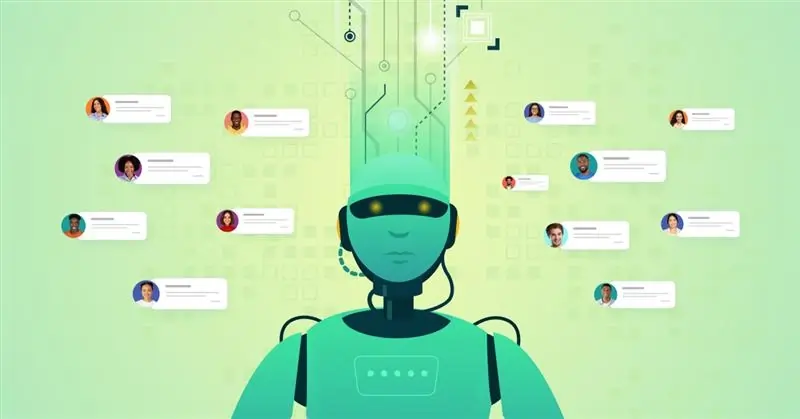
Imagine a customer calls in with a billing problem. Before any human picks up, an AI agent has already checked the account, spotted the error, looked up the refund policy, processed the fix, and sent a confirmation. The customer hangs up happy, in seconds.
This isn’t science fiction. Gartner predicts that by 2029, Agentic AI will handle 80% of common customer service issues on their own, with no human needed. That’s just three years away. Most companies are nowhere close to being ready.
And the biggest reason they’re not ready isn’t the AI; it’s their knowledge base.
AI agents can only work as well as the information they’re given. If that information is buried in long documents, scattered across multiple systems, or written for humans instead of machines, the AI will fail. It won’t just give wrong answers occasionally; it will give wrong answers consistently, at scale, with full confidence.
That’s what an agentic AI knowledge base is really about. It’s not just where you store your policies. It’s the foundation that determines whether your AI actually works or becomes a liability.
In this article, we break down what your knowledge base needs to support agentic AI, where most companies are falling short, and how to fix it before the window closes.
Table of contents
- What is an Agentic AI Knowledge Base?
- What Does an Agentic AI Knowledge Base Actually Require?
- 4 Agentic AI Knowledge Base Failures That Break Autonomous AI
- What an AI-Ready Agentic AI Knowledge Base Looks Like
- How to Build an Agentic AI Knowledge Base: 5-Step Framework
- How Knowmax Helps You Build an Agentic AI Knowledge Base
- Ready to Make Your Knowledge Base Agentic AI-Ready?
- Frequently Asked Questions: Agentic AI Knowledge Base
What is an Agentic AI Knowledge Base?
An agentic AI knowledge base is a structured, machine-readable repository of information that autonomous AI agents can query, reason over, and act upon — without human intervention. Unlike traditional knowledge bases built for human agents, an agentic AI knowledge base stores information as decision trees, conditional logic, numbered procedures, and rich metadata that AI systems can parse and chain into executable workflows.
What Does an Agentic AI Knowledge Base Actually Require?
Most AI in customer service today is reactive. A customer asks a question; the AI retrieves an answer. The knowledge base is a reference library, useful but passive.
A knowledge base chatbot is the most common version of that reactive pattern: it answers customer questions from approved articles rather than acting on them.
Agentic AI changes this architecture completely. Instead of retrieving and presenting information, agentic systems plan, reason, and execute. They do not just find the refund policy; they process the refund. They do not just surface troubleshooting steps; they run diagnostics, identify the issue, push a configuration fix, and confirm resolution.
For a fuller comparison of the two approaches, including where predictive models fit alongside them, see agentic AI vs generative AI.
For this to work accurately and safely, the knowledge these systems draw from must be structured very differently from what most organizations have built.
Today’s typical knowledge base, built from long-form articles, PDFs, and prose documentation, was designed for human agents who read and interpret. An agentic AI knowledge base, by contrast, requires machine-interpretable formats: structured decision trees, conditional IF/THEN logic, numbered procedures, and metadata-rich Q&A pairs that AI agents can chain into autonomous workflows. Technologies like Retrieval-Augmented Generation (RAG) and GraphRAG rely entirely on this kind of structured, governed knowledge to function accurately.
4 Agentic AI Knowledge Base Failures That Break Autonomous AI
Here is where most organizations will hit a wall. Their knowledge exists, but in forms that agentic AI cannot reliably work with. Each failure below represents a systematic error-generation risk at scale.
1. Prose-Heavy Articles Written for Human Readers
The classic knowledge base article is a flowing document, paragraphs of context, caveats, and explanation. A human agent reads it and extracts the relevant step. An agentic AI tries to parse it and may ground its decision in the wrong sentence, the wrong caveat, or an outdated paragraph buried at the bottom.
Agentic AI performs dramatically better when knowledge is structured as discrete, numbered steps with clear conditional logic: “If account type = Enterprise AND billing cycle = annual, then apply credit code X.” That’s parseable. A five-paragraph article about billing policy is not. This is exactly the format that modern RAG pipelines and GraphRAG architectures are built to consume.
Knowledge Base Templates That Work
2. Duplicated and Conflicting Information Across Systems
Over years of growth, most contact center knowledge bases accumulate the same information in multiple places, in the product wiki, the agent handbook, the CRM knowledge tab, and the shared drive. When these copies fall out of sync, a human agent can use judgment to identify the most current version. An agentic AI cannot. It will find and act on whichever version its retrieval pipeline surfaces, confidently and at scale.
According to research, 48% of organizations cite searchability of data and 47% cite reusability of data as top barriers to AI agent deployment. Duplicate, siloed knowledge is a root cause of both. Conflicting knowledge is not a nuisance when AI is involved. It is a systematic error-generation engine.
3. No Machine-Readable Decision Logic
Much of the procedural knowledge in contact centers lives in agent minds, not in systems. Experienced agents know that the standard return policy has four exceptions, which are not written anywhere; it’s just “what everyone knows.” Agentic AI has no access to tribal knowledge. It will follow whatever written procedure exists, missing the exceptions that a seasoned agent would catch.
Before agentic AI can work reliably, organizations need to surface and codify that implicit logic, turning “what everyone knows” into structured decision trees and exception-handling rules. This is what IBM and Oracle both describe as the prerequisite for “context-aware AI”, knowledge that machines can reason over, not just retrieve.
4. Stale Knowledge Without Governance
Policies change, products are updated, and pricing shifts. In a human-agent environment, a stale knowledge article is a problem. In an agentic AI environment, a stale article is a systematic failure. The AI acts on it consistently, at volume, without a human in the loop to catch the error.
Governance is not optional when AI agents are executing based on your knowledge. It is foundational. Agentic AI readiness consistently flags knowledge governance as a prerequisite, not a nice-to-have, before autonomous execution at scale.
The AI powered knowledge management guide shows the ownership, review and approval checks behind each answer.
What an AI-Ready Agentic AI Knowledge Base Looks Like
The organizations best positioned for the agentic AI transition share a set of knowledge infrastructure characteristics that most contact centers do not yet have.
| Dimension | Not AI-Ready | AI-Ready Agentic Knowledge Base |
|---|---|---|
| Content format | Long-form prose articles written for humans to read | Structured steps, decision trees, and Q&A modules that machines can parse and act on |
| Decision logic | Procedures written in narrative form — logic is implied | Explicit IF/THEN conditional logic coded into the content structure |
| Governance trigger | Articles are reviewed on a schedule or when someone flags an issue | Automated freshness scoring that flags stale content before agentic AI acts on it |
| API accessibility | Accessible via UI for human agents | Queryable via REST APIs and MCP-compatible connectors for agentic AI retrieval pipelines |
| Knowledge scope | Covers what a human needs to know | Also covers exception handling, edge cases, and escalation logic — the tribal knowledge humans carry but never write down |
How to Build an Agentic AI Knowledge Base: 5-Step Framework
The path to an agentic AI knowledge base does not require throwing out everything and starting over. It requires a deliberate sequence:
- Audit your highest-volume topics first. The 20% of articles handling 80% of interactions are the most critical to remediate. Start there.
- Convert to structured, machine-readable formats. Take your top 50 articles and reformat them as decision trees, numbered procedures, and Q&A pairs. These are the formats RAG retrieval pipelines can act on reliably — not prose.
- Establish governance before you scale AI. Assign ownership to every article. Set review cadences. Build a process for surfacing stale content automatically. Stale knowledge in an agentic system isn’t a nuisance; it’s a systematic failure at scale.
- Create a single source of truth. Consolidate duplicate knowledge. Pick the authoritative version. Archive the rest.
- Connect your agentic AI knowledge base to your AI retrieval layer. Use a knowledge platform with open APIs and MCP-compatible connectors that your agentic AI systems can query directly, not screenscraping.
How Knowmax Helps You Build an Agentic AI Knowledge Base
Most knowledge management platforms were built for human agents. Knowmax was built for what comes next.
Knowmax is an AI-powered knowledge management platform purpose-built for contact centres, designed to structure knowledge in the formats that agentic AI systems can actually consume. Here is what that looks like in practice:
- Structured content creation by design. Knowmax natively supports decision trees, step-by-step guided procedures, and Q&A modules, not just article editors. Every piece of content created in Knowmax is structured from the start, which means it is machine-readable by default. No retroactive reformatting required.
- Single source of truth across your entire stack. Knowmax consolidates knowledge scattered across CRMs, wikis, shared drives, and agent handbooks into one governed repository. When your agentic AI queries for a refund policy or an escalation procedure, it finds one version, the right one.
- Governance is built into the workflow. Knowmax includes automated content freshness scoring, ownership assignment, and review cycle management. Stale knowledge gets flagged before your agentic AI acts on it, not after a customer receives a wrong answer at scale.
- API-first architecture for agentic AI integration. Knowmax is built with open APIs that allow agentic AI systems to query the knowledge base directly. Your retrieval pipeline gets clean, structured, metadata-rich responses it can reason over and act on, immediately.
Ready to Make Your Knowledge Base Agentic AI-Ready?
The window for competitive differentiation through knowledge infrastructure is open right now. Every month spent on ungoverned, unstructured knowledge is a month your agentic AI investment is exposed.
Knowmax helps contact centers audit, restructure, and govern their knowledge so that when agentic AI scales, it has exactly what it needs to work accurately, every time.
See how Knowmax structures knowledge for agentic AI in your environment.
Frequently Asked Questions: Agentic AI Knowledge Base
A traditional knowledge base stores prose articles designed for human agents to read and interpret. An agentic AI knowledge base stores machine-readable formats, decision trees, numbered procedures, conditional logic, and structured Q&A pairs that AI agents can parse, chain, and execute autonomously without human interpretation.
An agentic AI knowledge base performs best with structured formats, including numbered procedural steps, IF/THEN conditional decision trees, JSON or YAML-formatted policies, rich metadata tagging, and Q&A pairs. These formats enable RAG (Retrieval-Augmented Generation) and GraphRAG architectures to retrieve and act on knowledge accurately.
The quality of an agentic AI knowledge base directly determines agent accuracy. Stale, duplicated, or prose-heavy knowledge causes AI agents to surface wrong information, at scale, automatically, without a human to catch errors. Structured, governed, single-source knowledge is the foundation of accurate autonomous AI execution.
AI-ready knowledge infrastructure refers to a knowledge base that is: structured in machine-parseable formats, free of duplicate or conflicting content, governed with clear ownership and review cycles, accessible via REST API or MCP-compatible connectors, and tagged with rich metadata for intent and use-case matching.
Enterprise-scale knowledge remediation: auditing content, converting prose to structured formats, resolving duplicates, and establishing governance, typically takes 12–24 months at scale. Organizations that begin in 2024–2025 will hold a significant competitive advantage over those starting after 2026.


 Word Document)
 Excel File)


