 28 Min



Imagine a customer reaches out to your business on Twitter, frustrated with an issue. Your support agent seamlessly picks up the conversation via live chat, retrieves their purchase history, and resolves the problem within minutes. This frustration-free experience is what your customers get when you use an omnichannel customer service platform.
With advancements in technology and myriad ways of reaching out to a brand, customers today expect frictionless experiences across all channels. This has led to the rise of omnichannel customer service platforms.
But what exactly is an omnichannel customer service platform, and what features should you look for when choosing one?
In this blog, we will look at some of the benefits and essential features that you need in an omnichannel customer service platform. We have also curated a list of tools you can consider for your unique needs.
Table of contents
- What is Omnichannel Customer Service?
- Benefits of Omnichannel Customer Service
- Top 10 Omnichannel Customer Service Platforms
- Comparison Table: Top 10 Omnichannel Customer Service Platforms at a Glance
- What Features to Look for in an Omnichannel Customer Service Platform
- Conclusion
- Omnichannel Customer Service Platforms FAQ
What is Omnichannel Customer Service?
Omnichannel customer service is a strategy that provides a seamless customer experience across all communication channels.
It is an approach that unifies all service channels, be it online or offline, to ensure that your customers can switch between channels of communication without any interruption or loss of information.
The idea is to provide consistent, personalized, and convenient customer service throughout the entire customer journey.
Benefits of Omnichannel Customer Service
Benefits of Omnichannel Customer Service
- Improves customer experience
- Increases Efficiency
- Offer Comprehensive consumer insights
- Enables Scalable Customer Support
1. Improves Customer Experience
Omnichannel customer support allows your customers to use the most convenient contact channel, chat, email, phone, or social media. This adaptability enhances the whole customer experience and boosts customer satisfaction rate.
2. Increases Efficiency
Implementing an omnichannel customer service strategy can help you streamline your customer service processes, making them more efficient and cost-effective. You can track all interactions and provide seamless customer experiences by integrating multiple communication channels into a single platform.
3. Offers Comprehensive Customer Insights
By implementing omnichannel customer service platforms, you can collect relevant data from several channels, giving you essential insights into customer behavior, preferences, and issues.
Analyzing this data helps you optimize your customer service strategies, customize offers to fit consumer expectations, and discover further development areas.
4. Enables Scalable Customer Support
As your business grows, so does the volume of customer queries across channels. An omnichannel approach allows you to scale support operations without compromising on quality.
With automation, centralized systems, and unified workflows, you can handle higher volumes efficiently while maintaining consistent service standards.
Top 10 Omnichannel Customer Service Platforms
Here is the list of the 10 best omnichannel customer service software:
1. Knowmax
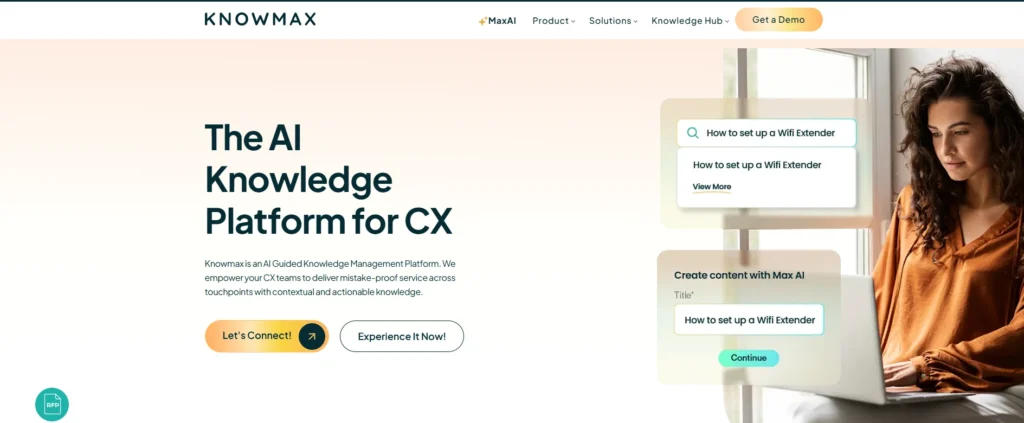
Knowmax is a CX-first knowledge management platform powered by generative AI, which helps you provide omnichannel customer service across channels.
It acts as a single source of truth for all customer service information. This allows agents to access the same knowledge base regardless of their channel to interact with a customer.
Knowmax also streamlines content distribution. You can design knowledge base articles, FAQs, and even step-by-step visual guides (great for self-service!) all in one place, then designate which channels they should be available on.
Key features:
- AI-powered search
- Knowledge formats like Decision trees, FAQs, visual guides, and articles
- Advanced analytics
- Chrome extension
- Multilingual support
Pricing:
Contact sales@knowamx.ai
See Knowmax in Action
2. Salesforce Service Cloud
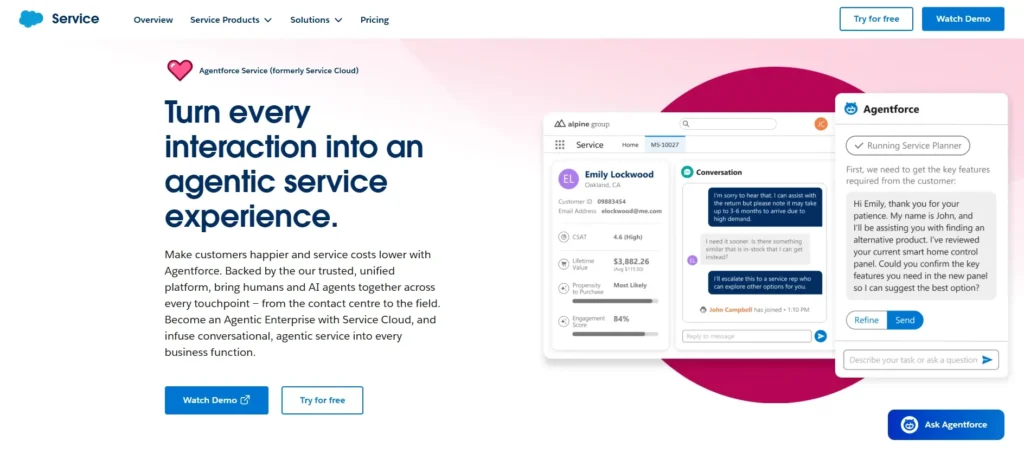
Salesforce Service Cloud is a customer service platform built on the Salesforce CRM platform. It provides a central console for agents to see all customer interactions from various channels (phone, email, social media, etc.) in one place.
Key Features:
- Case management and tracking
- AI-powered chatbots
- Customer self-service portals
- Analytics and Reporting
- Integration with Salesforce Sales Cloud and other Salesforce products
Pricing:
Starts at $25 per user per month for the Essentials plan, scaling up to $300 per user per month for the Unlimited plan with advanced features.
3. Zendesk
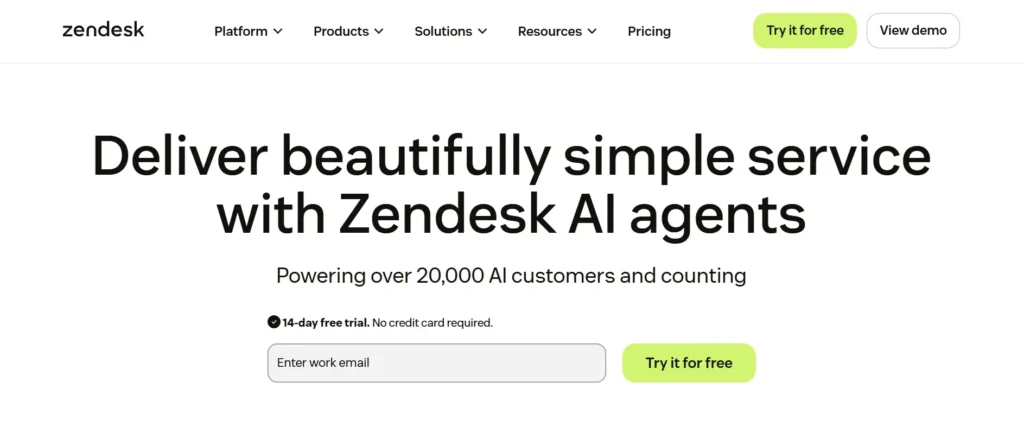
Zendesk is a cloud-based customer service platform and sales CRM known for its ease of use and flexibility. It helps you build better customer relationships by providing efficient and effective support across various channels.
Key Features:
- Omnichannel support
- AI-powered chatbots
- Self-service portals and knowledge base
- Automation and ticket routing
- Social media integration
- Analytics and Reporting
Pricing:
Starts at $19 per agent per month for the Suite Team plan, with higher tiers available up to $99 per agent per month for the Suite Enterprise plan.
4. HubSpot Service Hub
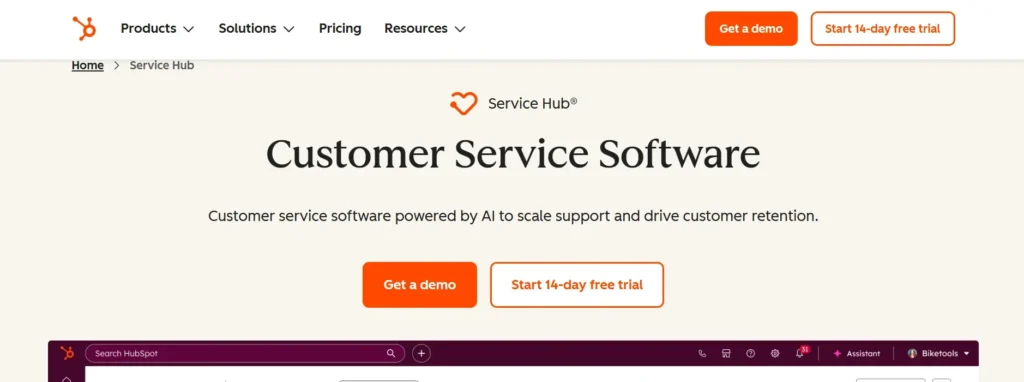
HubSpot Service Hub is part of the HubSpot CRM platform, providing a suite of tools designed to improve customer service and support. It integrates seamlessly with HubSpot’s marketing and sales hubs for a unified customer experience.
Key Features:
- Shared inbox and ticket management
- Automation tools
- Customer feedback and surveys
- Knowledge base and live chat portals
- CRM integration
- Multiple communication channels
- Reporting and Analytics
Pricing:
Free plan available with basic features. Paid plans start at $45 per month for the Starter plan, with more advanced options available up to $1,200 per month for the Enterprise plan.
5. Freshdesk
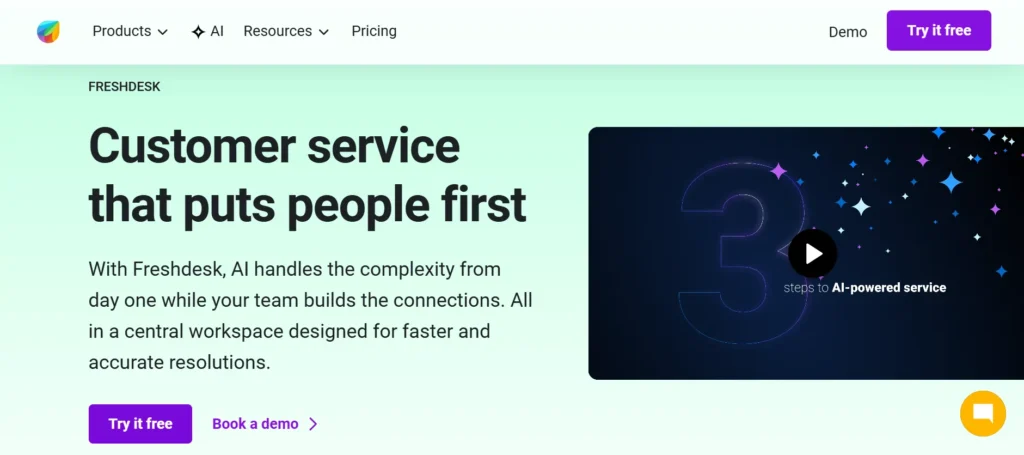
Freshdesk is a customer service platform from Freshworks. It caters to businesses of all sizes, providing tools to deliver customer support across multiple channels.
Key Features:
- Ticket management tools
- Central knowledge base
- Community forums
- Multiple communication channels
- Analytics and Reporting
Pricing:
Free plan available for small teams. Paid plans start at $18 per agent per month for the Growth plan, with higher tiers up to $95 per agent per month for the Enterprise plan.
6. Zoho Desk
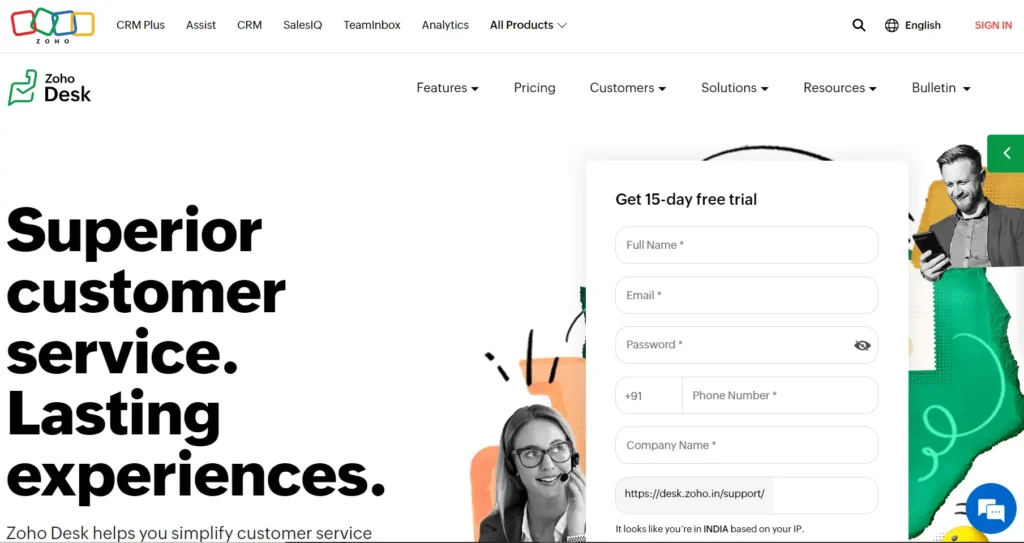
Zoho Desk is a customer service platform offered by Zoho that helps businesses provide personalized and efficient customer support. It integrates seamlessly with other Zoho products and a wide range of third-party applications.
Along with that, it’s also possible to enhance it with ZOHO Desk VOIP integration for phone calling, allowing teams to handle customer interactions more effectively.
Key Features:
- Ticket management tools
- Social media integration
- Multiple communication channels
- Automation and customization tools
- Analytics and Reporting
Pricing:
Free plan available with limited features. Paid plans start at $14 per agent per month for the Standard plan, with advanced features available up to $40 per agent per month for the Enterprise plan.
7. Intercom
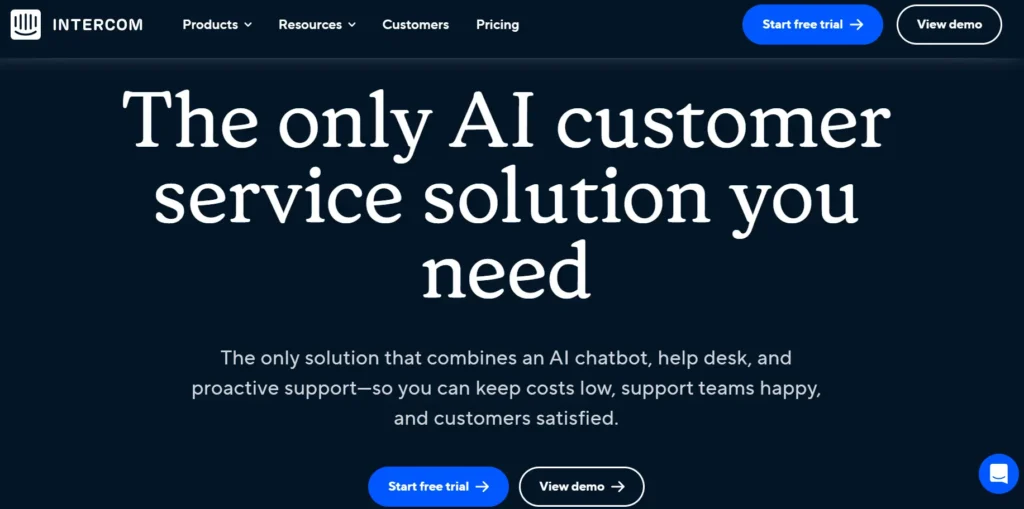
Intercom is a cloud-based customer communication platform that combines messaging, bots, and automation to deliver personalized support and engagement. It is designed to help businesses build better customer relationships through real-time communication.
Key Features:
- Automated chatbots
- Shared inboxes
- Customer messaging
- AI-powered routing
- Advanced Reporting
- Multiple communication channels
Pricing:
Starts at $59 per month for the Starter plan. Custom pricing is available for advanced plans and larger teams with additional features.
8. Tidio
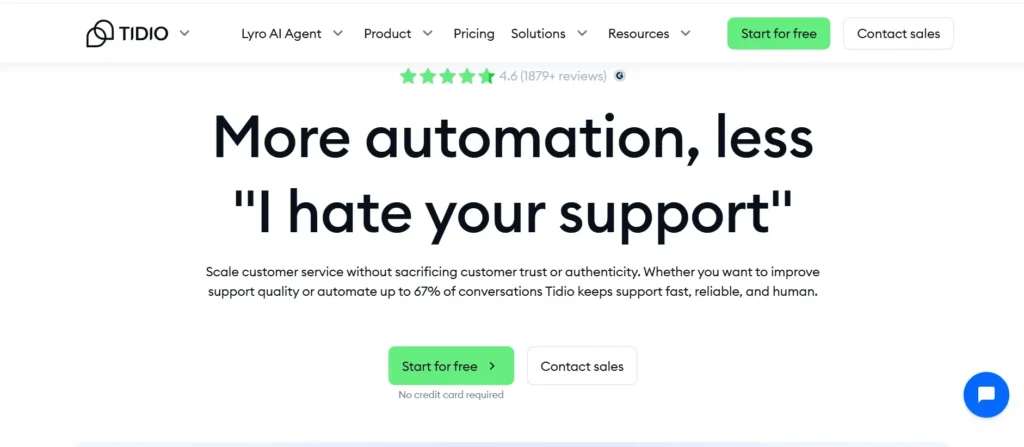
Tidio is an all-in-one omnichannel AI customer service platform built specifically for small and medium-sized businesses that want to deliver instant, personalized support without a complex setup. It brings together live chat, email, Instagram, WhatsApp, Facebook Messenger, and more into one unified inbox, making it easy for lean teams to stay on top of every customer conversation.
Key Features:
- True omnichannel inbox (live chat, email, WhatsApp, Instagram, Facebook Messenger)
- Lyro AI agent for automated query resolution
- Real-time visitor tracking and proactive engagement
- 35+ pre-built chatbot templates for lead gen and cart recovery
- One-click e-commerce integrations (Shopify, WooCommerce, Wix)
- Sales automation and analytics
Pricing:
Free plan available. Paid plans start at $29 per seat per month (Essential). Advanced plans are available for growing teams with higher automation needs.
9. Help Scout
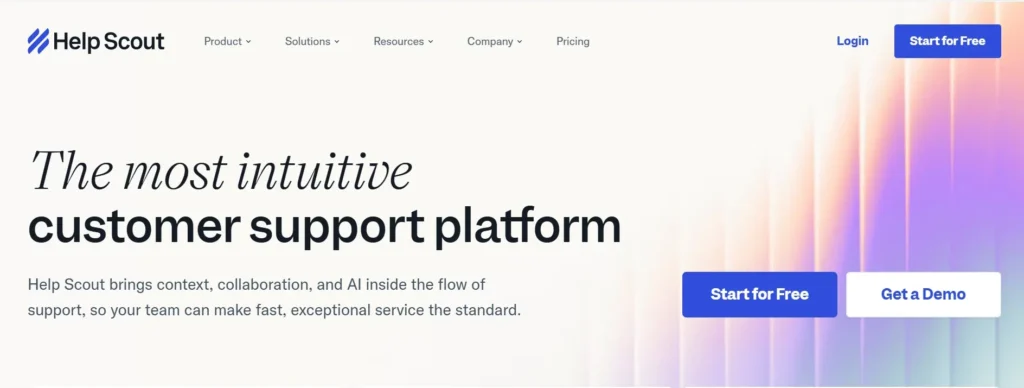
Help Scout is a straightforward omnichannel customer service platform designed for small and medium-sized businesses that want simplicity without compromising on capability. Rather than overwhelming your team with a complex interface, Help Scout presents everything in a clean, inbox-style layout that is easy to adopt from day one.
The platform centralizes email, live chat, and connected voice and SMS tools in a single workspace, ensuring your team always has the complete context of a customer’s history. It is especially well-regarded for its minimalist design that keeps agents focused on what matters most, resolving customer issues efficiently.
Key Features:
- Shared inbox for email, live chat, and messaging
- Customer conversation history across all channels
- Self-service knowledge base (Docs)
- Saved replies and workflows for team efficiency
- In-app messaging and proactive support
- Reporting and satisfaction ratings (CSAT)
Pricing:
Starts at $22 per user per month for the Standard plan. A Plus plan is available at $44 per user per month with advanced features, including custom fields and advanced reporting.
10. Kustomer
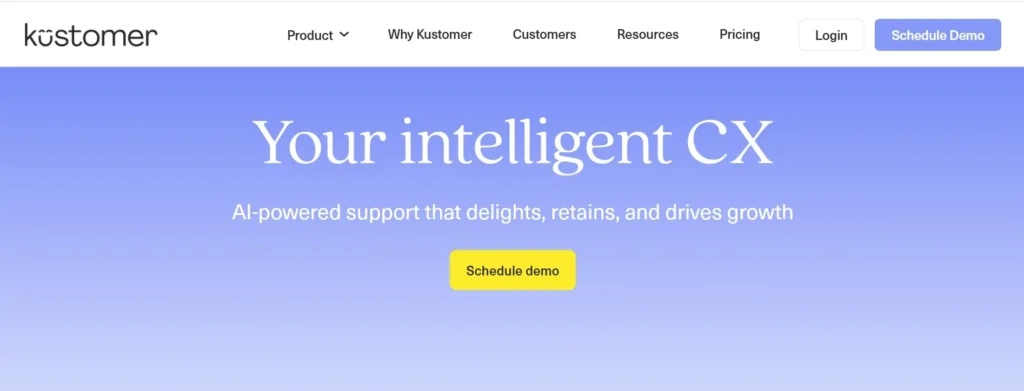
Kustomer is a true omnichannel customer service platform built to solve one of the most persistent problems in customer service: fragmented, ticket-centric support. Unlike traditional help desks, Kustomer is built on a native CRM architecture, which means every interaction, whether via email, SMS, social media, chat, or voice, flows into a single, chronological conversation timeline.
This data-first approach gives agents a 360-degree view of the customer, not just the current ticket. For high-volume B2C enterprise teams that manage complex, data-rich customer relationships at scale, Kustomer is one of the most powerful options on the market. Customers never have to repeat themselves, and agents always have the context they need to resolve issues quickly.
Key Features:
- Unified conversation timeline across all channels
- Native CRM with full customer history and profile data
- AI-powered automation for routing and resolution
- Omnichannel support (email, chat, SMS, social, voice)
- Advanced workflows and business rules
- Deep integrations with e-commerce and CRM tools
Pricing:
Custom pricing based on business size and requirements. Contact Kustomer’s sales team for a tailored quote.
Comparison Table: Top 10 Omnichannel Customer Service Platforms at a Glance
Choosing the right omnichannel platform depends on your team size, budget, and the channels you need to support. Here is a quick side-by-side comparison to help you decide:
| Tool | Starting Price | Free Plan | AI Features | Best For |
|---|---|---|---|---|
| Knowmax | Contact sales sales.km@knowmax.ai | No | Yes | Knowledge management (CX teams) |
| Salesforce Service Cloud | $25/user/mo | No | Yes | Enterprise CRM users |
| Zendesk | $19/agent/mo | No | Yes | Mid to large teams |
| HubSpot | $45/mo | Yes | Limited | Marketing-aligned teams |
| Freshdesk | $18/agent/mo | Yes | Yes | Cost-conscious teams |
| Zoho Desk | $14/agent/mo | Yes | Yes | SMBs & startups |
| Intercom | $59/mo | No | Yes | Real-time engagement |
| Tidio | $29/seat/mo | Yes | Yes | SMBs & e-commerce |
| Help Scout | $22/user/mo | No | Limites | Small-medium teams |
| Kustomer | Custom pricing | No | Yes | High-volume B2C |
What Features to Look for in an Omnichannel Customer Service Platform
1. Single Customer View
A single customer view provides a central repository of the customer’s information and their interactions with your business across all channels.
This allows you to provide contextually aware and personalized support that considers the customer’s entire history with the organization.
A single view effectively improves customer satisfaction rates by providing tailored support that meets their needs.
2. Seamless Channel Integration
Seamless integration across multiple communication channels, such as email, phone, chat, social media, and SMS, is crucial for an effective omnichannel customer service platform.
Your customers expect consistency and simplicity when switching between channels. And a platform that integrates these channels allows for smooth transitions and ensures that questions are handled quickly.
2. Self-service Option
Self-service allows your customers to solve their problems independently, decreasing the need for agent intervention.
It also lowers the number of routine support questions while helping you provide an exceptional service regardless of time or agent availability.
The Self Service Playbook
3. Personalization
Personalization is important to consider when establishing an omnichannel customer support platform.
This makes your customers feel looked after as you can understand their requirements and preferences and can cater to them accordingly. This results in enhanced customer happiness and loyalty, as well as higher sales and profitability.
An omnichannel customer service platform can help you personalize your communication with the customers by using customer data to adapt suggestions or providing tailored services depending on customer preferences.
4. AI-Powered Automation and Assistance
AI is no longer optional in an omnichannel setup. A strong platform should use AI to automate repetitive queries, suggest relevant responses to agents, and route tickets intelligently.
Features like AI chatbots, intent detection, and smart recommendations help reduce response time and improve resolution accuracy. This not only boosts agent productivity but also ensures customers get faster and more consistent support across channels.
5. Advanced Analytics and Reporting
To continuously improve your customer service, you need clear visibility into performance. Advanced analytics help you track key metrics like response time, resolution rate, customer satisfaction (CSAT), and channel performance.
With these insights, you can identify bottlenecks, understand customer behavior, and make data-driven decisions to optimize your omnichannel strategy.
Conclusion
Delivering consistent and connected customer experiences is no longer a competitive advantage, it is an expectation. An omnichannel customer service platform helps you unify conversations, reduce friction, and empower both your agents and customers with the right information at the right time.
From seamless channel integration to AI-powered automation and deep analytics, the right platform can transform how you engage with customers and scale your support operations efficiently.
If you are looking to strengthen your omnichannel strategy with a powerful knowledge management layer, Knowmax can help you deliver accurate, consistent answers across every touchpoint.
Book a demo today to see how Knowmax can elevate your customer service experience.
Omnichannel Customer Service Platforms FAQ
Omnichannel customer service is the smooth integration of many channels so your customers can switch between them without losing context. It delivers a uniform experience across all channels.
Multichannel customer support, on the other hand, provides multiple channels for customer engagement. However, these channels may not be connected. Each channel runs independently, which can lead to disconnected customer experiences.
Phone, email, chat, social media, in-person interactions, and other digital platforms are the channels that form omnichannel customer service.
To implement an effective omnichannel strategy, you should:
1. Understand your customer’s preferences and habits
2. Invest in a comprehensive omnichannel customer service platform
3. Maintain a consistent brand voice and message across all channels
4. Ensure smooth transitions between channels when a customer needs to switch
5. Train your agents to handle interactions across various channels
6. Continuously improve based on user feedback and changing customer needs
These practices can provide a seamless customer experience and increase happiness and loyalty.
Omnichannel customer service provides a seamless experience for your customers across all touchpoints, allowing them to engage with your business in the most convenient way.
This improves the customer experience by increasing convenience, reducing response times, enabling personalized interactions, and ensuring consistency across all channels.


 Word Document)
 Excel File)


